Oat Milk in Bali: What Is Actually on the Shelf
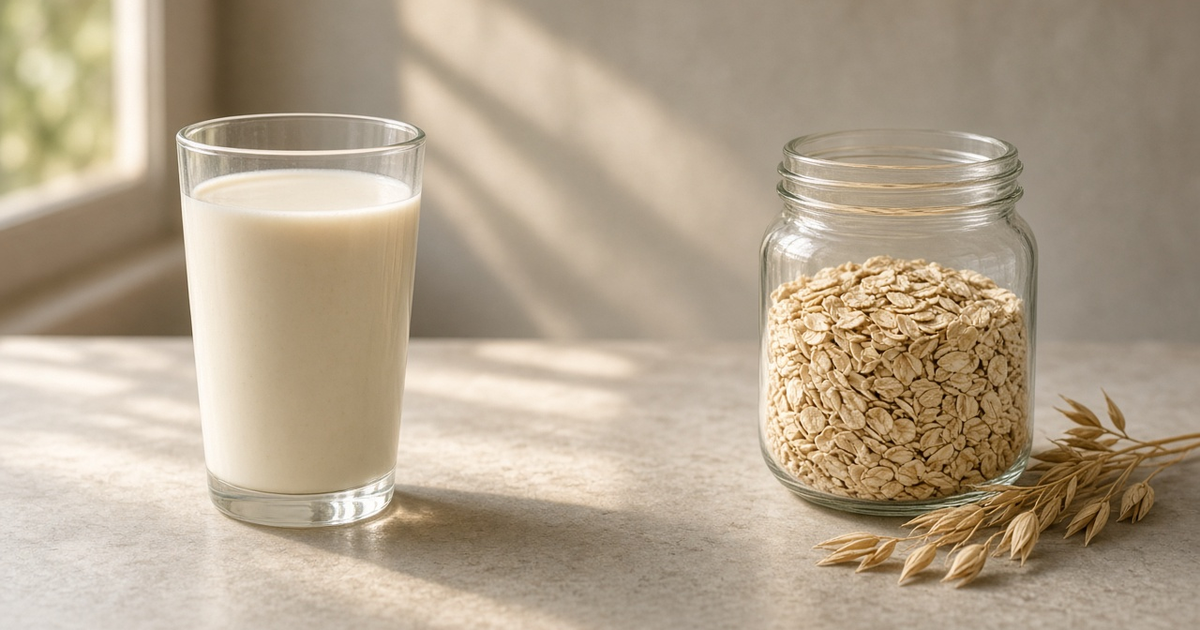
Oat milk in Bali is not one product, it is three formats sharing a name: an ambient UHT carton, a barista carton built with added oil, and a chilled bottle made on the island and sold inside a few weeks. Most of what sits on a Bali shelf is made in Indonesia already, including the best known carton, which is produced in Bandung.
So the shelf question is not which brand, it is which format fits your week. Here is what each one actually says on the label, what it asks of your fridge, and where the fresh bottle stops making sense.
Three formats, one shelf
Walk into a Pepito in Canggu or a Bali Buda in Ubud and the word oat covers three supply chains. The ambient aisle holds cartons that survived a ship and can sit in a cupboard for months. The chiller holds bottles that were pasteurised this week and will not survive a day on the counter.
The carton most people reach for first is Oatside, and it is worth knowing where it comes from. The company states that its oat milk is produced in Bandung, from roasted oats and mountain spring water, not shipped in from Europe. Their own answer on origin and ingredients makes the label easier to read.
The chilled side is local by definition. Huma Bali lists its Super Oat as made fresh in Bali, pasteurised gently rather than UHT treated, and sweetened with dates instead of cane sugar, per their product page.
Jiva Creations runs the same play at a smaller size, with 500 ml bottles in health shops. Neither travels well, which is why you only meet them here.
| Format | Shelf life | Where you meet it in Bali | What the label tends to say |
|---|---|---|---|
| Ambient carton | 9 to 12 months, cupboard | Minimarkets, Pepito, Grand Lucky, online grocers | Oat base, water, oil, acidity regulator, calcium, salt |
| Barista carton | 9 to 12 months, cupboard | Cafes, specialty grocers, cafe supply | Same list, with the oil share built for foam |
| Chilled local bottle | 21 days or less, fridge only | Health shops, cafes, direct delivery | Water, oats or nuts, a sweetener, maybe salt |
What the cartons actually say
Turn the carton over and the differences stop being marketing. These are the lines worth reading before the brand name.
- Oat base percentage: usually printed as 10 percent, so the rest is water plus whatever carries the texture. A higher share is not automatically better, but it says how much of the drink is grain.
- The oil line: canola or rapeseed appears because oats are low in fat, and without added fat the drink will not foam. That is a functional choice, not a hidden sin.
- The acidity regulator: dipotassium phosphate keeps the emulsion stable and stops the carton splitting in hot coffee. It is a phosphate salt, and the line most people skip.
- Calcium carbonate: added back because the oats never had it. A fortified carton will carry calcium, an unfortified one will not.
- Added sugar: listed separately from the sugar the oats release during milling. Sweetened and chocolate lines can carry several times the sugar of a plain barista blend.
- Gums and emulsifiers: some brands use them, some argue they do not need to. Oatside states its barista blend carries no gums or emulsifiers.
- The sweetener used by fresh producers: date sugar and coconut sugar show up where a carton would use cane, which changes the taste more than the carbohydrate total.
This article is general information, not medical advice. If you have a diagnosed condition, are pregnant, or are changing a child’s diet, talk to your doctor or a dietitian first.
Two notes matter more than the rest for a Bali shopper. Oats are naturally gluten free, but cartons are often milled in facilities that also handle wheat, so a coeliac reader should look for an explicit statement. And none of these cartons contains tree nut, which makes oat the safer default where someone reacts to cashew.
Why the ambient carton owns the shelf
Availability is not an accident of taste. A carton that lives nine months unrefrigerated can sit in a warehouse, ride a truck to Denpasar, and wait on a minimarket shelf until someone buys it. No cold chain, no spoilage write-off, no daily delivery route.
That structure is why the oat carton beat every fresh milk to national distribution. Indomaret and Alfamidi carry it, the big grocers carry a wider range, and cafe supply reaches the rest. If you need milk at 9 pm in Sanur with no planning, the ambient carton is the only honest answer.
The price you pay for that is not really the oats. It is freight, import layers, packaging and retail margin, stacked on a raw material that is cheap. We broke the arithmetic down in what plant milk costs in Bali, including why the per litre figure moves with shipments and promotions.
What the chilled bottle gives back
A fresh bottle trades all of that distribution for three things: a shorter label, a fresher drink, and a taste that has not been through a retort.
The label is the visible part. A small batch producer working in Bali can list water, oats or nuts, a sweetener and salt, then stop, because the body comes from the ingredient itself rather than from a stabiliser kit.
The trade is time. Fresh, pasteurised milk holds roughly 21 days refrigerated and drinks best early in that window, and once opened it is a matter of days, not weeks. Buying fresh is a weekly habit, not a monthly stock-up.
Choose the ambient carton if:
- You have no reliable fridge, or you are in a villa for a short stay.
- You want milk in the cupboard as a backup and do not want to think about it.
- You need the barista version specifically, because foam is the whole point of your coffee.
- You are buying for a household that finishes a litre slowly.
Choose the chilled local bottle if:
- You have a fridge that stays cold and you drink milk most days.
- You want an ingredient list you can finish reading without a lookup.
- You care more about texture in the glass than about foam in a jug.
- You are settled enough in one area of Bali to hold a weekly delivery rhythm.
Neither column is a moral position. They are two supply chains answering two different weeks.
The barista question, answered honestly
Barista cartons exist because steaming is a physics problem. Foam needs fat and protein to trap air, and oats bring starch and very little fat, so producers add oil and tune the base until the microfoam holds. That is why a barista carton froths when the plain one will not.
Our own position is simple: Worry Nut has no barista grade formula on the shelf. A version for hot steaming is in development, not available. For now the cashew bottle works in cold brew, iced coffee and robusta, and the base by base comparison lives in the coffee guide.
Where a fresh cashew bottle fits
Worry Nut Fresh Cashew Mylk is made in Ubud, Bali, in small batches, and it sits on the chilled side of this shelf rather than in a carton. It is a cashew milk, not an oat milk, so it does not answer the same question.
The bottle carries six ingredients: filtered water, Indonesian cashews, Central Java coconut sugar, Kusamba sea salt, sunflower lecithin and Bali vanilla. It is pasteurised gently rather than UHT treated, so it stays a fresh product with a 21 day refrigerated life, best finished within four days of opening. The panel below is lab measured by Prodia OHI, per 200 ml serving.
- Energy: 80 kcal
- Total fat: 6 g
- Sodium: 150 mg
- Carbohydrate: 5 g
- Sugar: 2 g
- Protein: 2 g
Cashew milk is not a nutritional substitute for cow’s milk. Worry Nut carries 2 g of protein per 200 ml serving against roughly 8 g in cow’s milk, and it is not fortified with calcium or vitamin D. If you are relying on milk for those nutrients, plan for them elsewhere.
Cashew is a tree nut, so this bottle is not suitable for anyone with a tree nut allergy. It is dairy free by recipe, which is a different question from what an oat carton does to a gluten free kitchen.
Delivery runs chilled in Bali to Canggu, Ubud and Seminyak, and anywhere in the served area on three bottles or more, with same day arrival in South Bali. Jabodetabek is fulfilled through a local stockist and confirmed over WhatsApp, with no free delivery claim attached.
Bali orders go through the order page, where you pick a delivery day and slot; anything before 14:50 WITA ships same day. One litre is Rp 75.000, against a normal price of Rp 85.000. For who stocks what, start with where to buy plant milk in Bali, and if oat versus cashew is the real question, that comparison has its own page.