How Much Does Plant Milk Cost in Bali? Imported vs Local
How Much Does Plant Milk Cost in Bali? Imported vs Local
Your first grocery run in Bali ends with a small shock at the register. The carton of almond milk in your basket costs more than the fresh fruit beside it, and you start doing quiet math about how many cartons you drink in a week. If that math has been nagging you, you are not alone. Ubud draws people who care about what they eat, and nearly every expat we meet here asks the same question: why is plant milk so expensive, and is there a better way to buy it?
Part of the answer is your body, not the island. Roughly two-thirds of adults worldwide cannot digest lactose properly, and in East Asian populations the share runs from 70 to 100 percent. Dairy drops off the table for a lot of people, which turns plant milk from a treat into a weekly staple. A staple you pay for every single week. The price question matters, and it deserves a straight answer.
Why imported plant milk costs what it costs
Most of the plant milk sold in Indonesia is imported. That single fact explains most of the price you see on the shelf. An imported carton pays for the crop, the processing plant overseas, the container voyage, import duty, and the margin of every handler between the port and your supermarket aisle. Chilled brands also travel in cold containers, and cold logistics is never cheap.
The shelf in front of you carries almond, oat, soy, and the rest. Each brand runs its production line in its home market, ships the finished product in, and prices it for a market where imports are the norm. Walking a typical Ubud supermarket, you will see imported plant milks sitting somewhere around Rp 30,000 to Rp 60,000 per litre, and the exact number moves with the store, the importer, and the week. Promotions swing it around more than the recipe ever changes.
There is another cost hiding inside those cartons that never appears on the tag. Most imported plant milks are UHT treated so they can survive months without refrigeration. UHT processing runs at 138 to 149 degrees Celsius, and the heat measurably degrades heat-sensitive vitamins: a 1989 Journal of Dairy Science study recorded about 32 percent vitamin C loss, 18 percent B12, and 12 percent folic acid loss at processing, with further losses during months of room temperature storage. You are paying shipping and duty for a product that already lost part of its nutritional value before it reached the shelf.
The local alternative, and where its price comes from
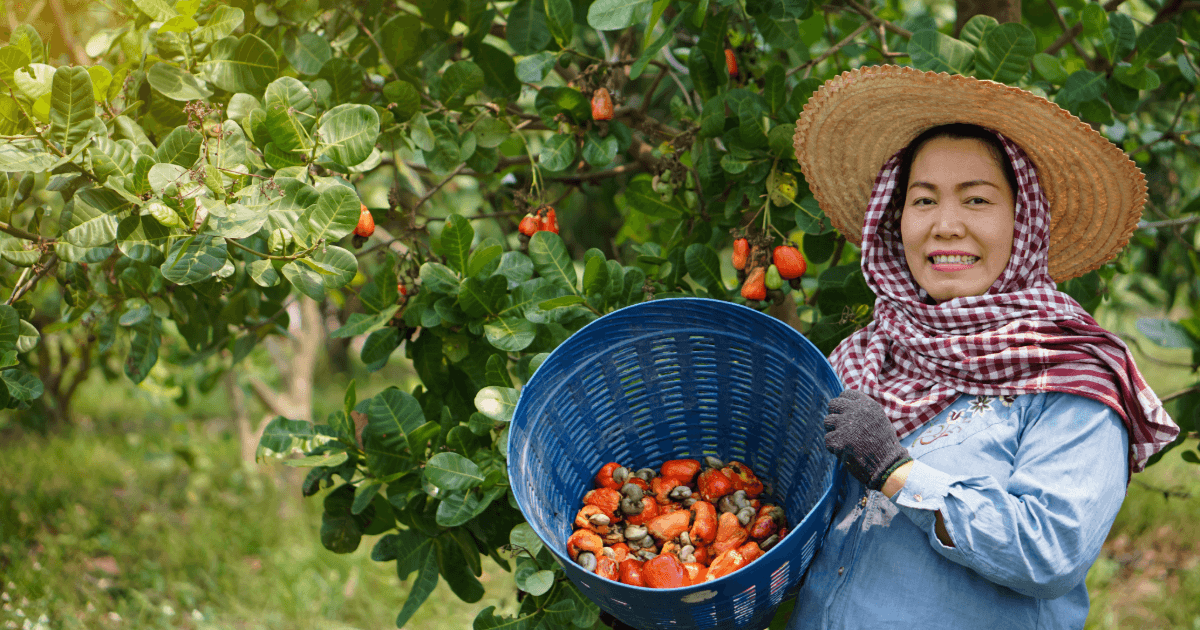
Indonesia grows the raw material for a better option. The country sits around sixth among the world’s cashew producers, roughly 164,000 tonnes in 2023, with the crop coming mostly from Sulawesi and Nusa Tenggara. Domestic demand for plant milk is rising as the middle class grows, and yet most of what people drink is still freighted in from abroad. That gap is the reason Worry Nut exists: Indonesian cashews, turned into fresh cashew mylk in Ubud, sold the way fresh food should be sold.
Local fresh plant milk costs more per litre than an imported carton. Worry Nut Fresh Cashew Mylk sells at Rp 85,000 for a 1 litre bottle. We will not pretend otherwise, and we will not spin this article into a price race we are not in. The honest comparison needs three columns: price per litre, what a serving delivers, and where the money goes.
One note on our price logic before the value math. We make small batches of pasteurized, refrigerated mylk with 21 days of shelf life and no preservatives. Pasteurization is gentle next to UHT, so micronutrients survive the trip from kettle to bottle. Every bottle carries six plain-English ingredients. None of that is cheap to do, and we price it openly at a fixed number instead of burying costs in promotions. If you want the full argument for buying local, we laid it out in our piece on why buying local plant milk in Bali changes the picture.
Price per serving, not price per litre
Per litre, imported cartons look like the deal. At Rp 30,000 to Rp 60,000 per litre, and roughly five 200 ml servings per litre, an imported serving runs from Rp 6,000 to Rp 12,000. Worry Nut at Rp 85,000 per litre lands around Rp 17,000 per 200 ml serving. On paper that is one and a half to three times the outlay. We are not going to wave that away.
But groceries are consumed one serving at a time, and the serving is where the difference shows. Worry Nut’s nutrition is lab tested at Prodia OHI: 80 kcal, 6 g fat, 150 mg sodium, 5 g carbs, 2 g sugar, and 2 g protein per 200 ml. Two grams of sugar, even with coconut sugar doing the sweetening. Now read the ingredient column of an imported carton and you hit the familiar parade of gums, phosphates, refined oils, stabilizers, and vague “natural flavors”. Gums like xanthan and gellan sit in many store-bought plant milks, and some people with sensitive stomachs react to them. Cashews are naturally creamy, which is why a cashew mylk needs no gums for body. You are not paying for thickeners; you are paying for the actual nut, water, Kusamba sea salt, a little coconut sugar, sunflower lecithin, and vanilla.
There is also the freshness math. An imported UHT carton can sit on your shelf for months. A fresh local bottle gives you 21 days, and it tastes like it. You buy smaller, you drink sooner, you waste less, and you do not pay for a product that has been parked in a warehouse since last season. Against dairy, plant milks are not nutritional twins: dairy carries more naturally occurring protein and calcium, while unsweetened plant milks bring fewer calories and less sugar.
What you pay for
Think about the month, not the bottle. If two imported litres a week is your habit, that is roughly eight or nine litres a month, and at the typical range you are looking at Rp 260,000 to Rp 520,000 a month before you pour a glass. That money mostly leaves the country. It pays a farm and a factory overseas, freight, duty, and a foreign brand’s operating costs. The local option keeps more of it here: Indonesian cashew farmers in Sulawesi and Nusa Tenggara, and a Ubud production kitchen.
We are not claiming local is the cheapest. It is not. We are claiming local is the cleanest option at a known, published price. Imported prices swing with promotions and exchange rates; Worry Nut costs Rp 85,000 per litre. You know exactly what you pay, what is in it, and who gets paid.
Five price questions expats ask us
Why is almond milk expensive in Bali?
Because almost none of it is made here. Indonesia imports most of its plant milk, and every imported carton carries the costs of growing, processing, shipping, duty, distribution, and retail margin before it reaches you. Add inflation and a moving exchange rate and the shelf price makes sense even when it stings. The Rp 30,000 to Rp 60,000 per litre range is what you will typically find, with better deals during promotions.
Is local plant milk cheaper?
Sometimes, but do not go shopping expecting a discount. A local fresh cashew mylk at Rp 85,000 per litre costs more per litre than an imported carton because it is a different product: fresh, refrigerated, short shelf life, no preservatives, and a short supply chain that pays local farmers. If your only metric is rupiah per litre, imported wins. If your metric is what each serving does for you and where the money lands, the comparison flips.
What does Worry Nut cost?
Rp 85,000 for a 1 litre bottle. That price is published and fixed, not a promo-dependent shelf number. The bottle holds five 200 ml servings at 2 g of sugar per serving, and our chilled delivery reaches Ubud and Canggu the next day so bottles arrive cold. Delivery details and stockist addresses live on our where to buy page.
Are supermarket prices the same everywhere?
Prices are not the same everywhere. Retailers set their own margins, and the imported range of Rp 30,000 to Rp 60,000 per litre moves with the store, the importer, and the promotion calendar. Specialty health stores in tourist areas often sit at the top of that range, big chains run periodic deals, and prices can shift between your morning and evening shop. Local fresh milk sidesteps that: one price, set by the maker, wherever it is sold.
Is plant milk a big part of grocery spend?
It adds up faster than people expect. A two-litre-a-week habit is roughly eight or nine litres a month, and at typical imported prices that lands between Rp 260,000 and Rp 520,000 a month. For someone drinking plant milk daily, it can become one of the biggest food line items after rent and transport. That is why our advice is to buy fewer, better litres: one fresh litre with six ingredients and 2 g of sugar per serving beats three imported litres you never finish.
Where Worry Nut fits in your fridge
Here is our honest recommendation. If you need a pantry staple that can survive a Bali month, an imported UHT carton has a place in your kitchen as backup supply. But for daily drinking, for cereal, for coffee, for smoothies, a fresh local mylk is a better use of the same money. Cashew mylk is creamier than almond milk and sits closer to dairy in texture, which is why it works in coffee, cooking, and breakfast bowls without making you relearn your recipes.
Worry Nut is made in Ubud from Indonesian cashews, pasteurized and refrigerated, with six ingredients and lab-tested nutrition you can read on the bottle. One litre costs Rp 85,000. It is not the cheapest milk in Bali, and we will not tell you it is. It is the cleanest local option at a price we publish and stand behind, delivered cold to Ubud and Canggu the next day.
That is the whole comparison in a few lines: imported milk costs less per litre and hides more inside it; local fresh milk costs more per litre and shows you everything. One of those buys a product shipped across an ocean. The other buys Indonesian cashews, a Ubud kitchen, and a fridge shelf that stays honest.
See the full picture before you decide. Read our guide to plant milk for expats in Indonesia. Then check the fresh option for yourself at worrynut.id, or follow @worry.nut on Instagram to see what we are pouring this week.