Seed Oils in Plant Milk: What Indonesian Labels Say
Seed oils in plant milk are usually added for body and foam, and an Indonesian carton tells you which one you are getting by the word in front of it: minyak is oil, lesitin is an emulsifier. Those are two different ingredients from the same seed, used at very different doses.
The rest of this guide is about reading that difference on a shelf in Bali, because the position of the fat on the list says more than the word “clean” on the front of the pack.
What counts as a seed oil on a carton
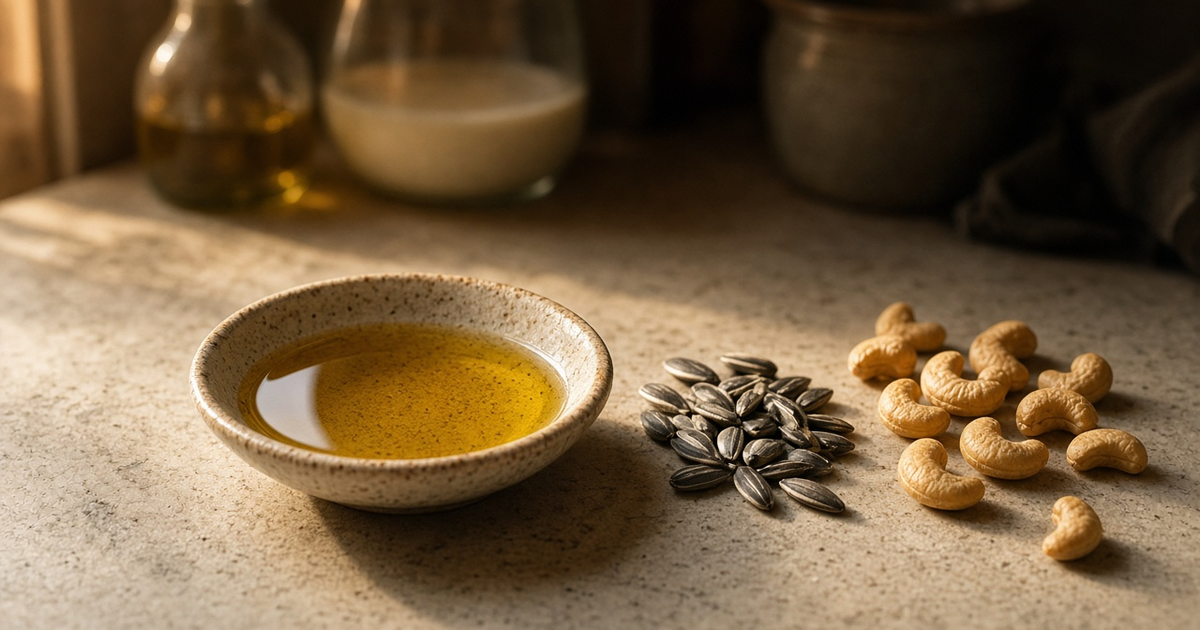
The seed oils that turn up in plant milk are sunflower, canola (often written rapeseed), safflower, soybean and sometimes grapeseed. Coconut and palm are fats from fruit, not seeds, which is why a drink can be “seed oil free” and still carry coconut cream or palm fat.
On an imported carton sold in Indonesia, the fat is rarely hidden. It is listed as minyak nabati (vegetable oil) or named directly as minyak bunga matahari. The generic form is legal, and it is the one that tells you least.
The generic form hides which oil, and how much: a blend can change while the label keeps saying the same three words.
How an Indonesian label separates oil from lecithin
Indonesian labelling rules do two useful things here. First, ingredients follow the order of their percentage in the product, what BPOM calls the kaidah urutan persentase jumlah bahan. Second, an emulsifier must be written with its class name and its plant origin, so the label reads pengemulsi lesitin bunga matahari, not just “lecithin”.
The BPOM guide to food labelling spells both rules out, with worked examples of labels that name the emulsifier and its source. That is a more informative format than most English-language cartons carry.
| Line on the carton | What it actually is | What it does | How to spot it |
|---|---|---|---|
| Minyak nabati | A refined blend of vegetable oils | Body, mouthfeel, foam | Generic, origin often unnamed |
| Minyak bunga matahari | Refined sunflower oil | Richness and foam under steam | A named oil, usually high on the list |
| Pengemulsi lesitin bunga matahari | The phospholipid fraction of the seed | Keeps fat and water from separating | Class word first, low on the list |
| Pengemulsi lesitin kedelai | Soy lecithin | Same job, different source | Check the allergen line for soy |
| Lemak nabati | Vegetable fat, often palm or coconut | Thickness | Lemak, not minyak |
| Xanthan, gellan, locust bean gum | Hydrocolloids | Stops separation without fat | Not a fat at all |
Read the whole line, not the first word: lesitin and minyak are not interchangeable.
- Minyak means oil: a fat added in its own right, usually at a visible percentage.
- Lesitin means emulsifier: a phospholipid fraction, used at a fraction of a percent to hold the drink together.
- The class word comes first: pengemulsi is the function, lesitin is the substance, and both must appear.
- Origin must be named: sunflower, soy or rapeseed, so a soy allergy has something to check.
- Lemak is not minyak: vegetable fat behaves like oil in the glass but is labelled differently.
- Gums are not fats: if the texture comes from xanthan or gellan, the label will say so.
- “Seed oil free” is not a regulated term in Indonesia: treat it as marketing until the ingredient list backs it up.
Why the oil is in there at all
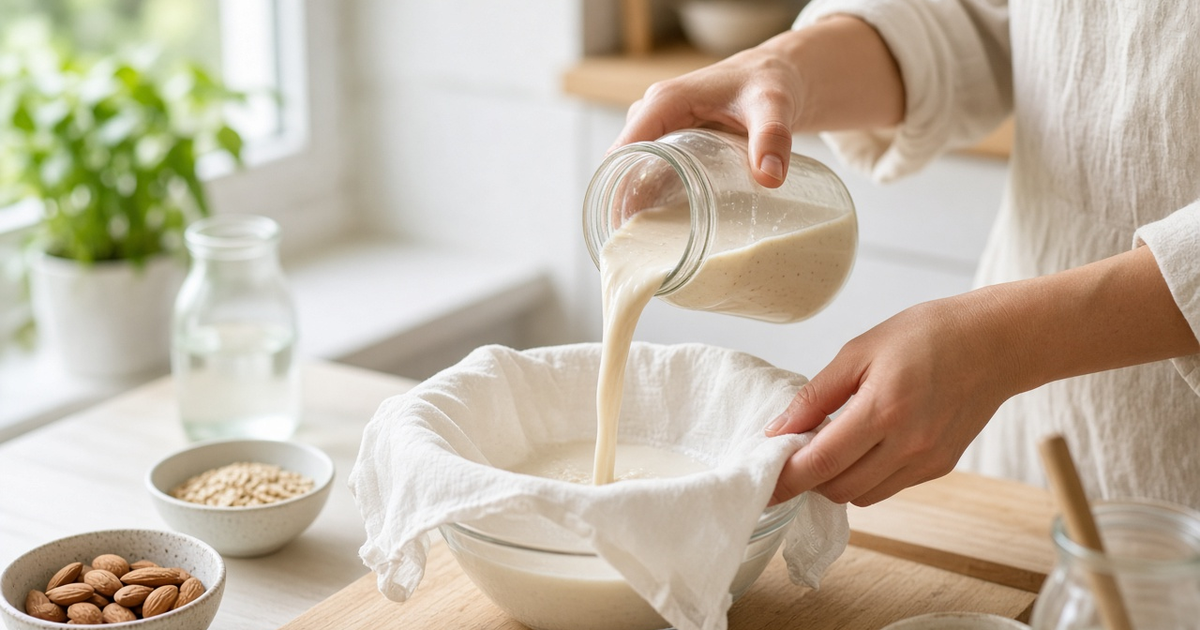
A plant milk is an emulsion: ground nuts or grains suspended in water, with fat that wants to rise. Homogenisation breaks the fat into small droplets, and an emulsifier keeps those droplets from rejoining. That is the whole technical problem, and there are two ways to solve it.
The first is to add oil, which raises the fat phase and gives the drink a rounder mouthfeel and a foam that survives steam. The second is to use a small amount of lecithin from sunflower or soy, typically 0.2 to 0.5 percent of the finished product according to industry usage guidance, and let the base ingredient supply the rest.
Neither approach is a trick. A barista carton that has to foam under a steam wand genuinely needs more fat than a drinking carton.
Position on the list is the closest thing to a dose
Because the list runs in descending order of percentage, position is your only reliable dose signal. An oil that appears before the oats, the almonds or the cashews is carrying the drink. An oil that appears near the end, after salt, is a finishing touch.
Lecithin almost always sits at the end, and that is the point. A carton can list both minyak bunga matahari and pengemulsi lesitin bunga matahari and still be a very different product from one that lists only the emulsifier.
This is the part the online argument usually skips. “Contains seed oil” tells you nothing until you know whether it is three percent of the bottle or a fraction of a percent.
Choose a carton with added oil if:
- You steam milk for coffee and need a foam that holds.
- You want a richer texture in a drink with a low-fat base such as oat or almond.
- The oil is named, the percentage is plausible, and the rest of the list is short.
Choose the shorter list if:
- You drink plant milk by the glass and do not need barista foam.
- You would rather get fat from the nut or seed itself than from a refined oil.
- You want an ingredient list you can finish reading without a lookup.
What the evidence actually says
The loudest claims about seed oils are about omega-6 fats and inflammation, and the human evidence is calmer than the posts suggest. A 2020 meta-analysis in the American Journal of Clinical Nutrition pooled 38 prospective cohort studies and found higher linoleic acid intake associated with modestly lower mortality from all causes, cardiovascular disease and cancer.
That is observational data, not proof, and the authors say residual confounding cannot be ruled out. Controlled trials cited in the same paper did not show that linoleic acid raises inflammatory markers. So the honest position is that the fear is ahead of the evidence, in both directions.
The better argument against a long ingredient list is simpler and needs no villain. Added oil brings calories without the fibre, protein or micronutrients of the whole nut, and it lets a thin base pass as creamy. That is a formulation choice you can see on the label.
This article is general information, not medical advice. If you have a diagnosed condition, are pregnant, or are changing a child’s diet, talk to your doctor or a dietitian first.
Where Worry Nut fits
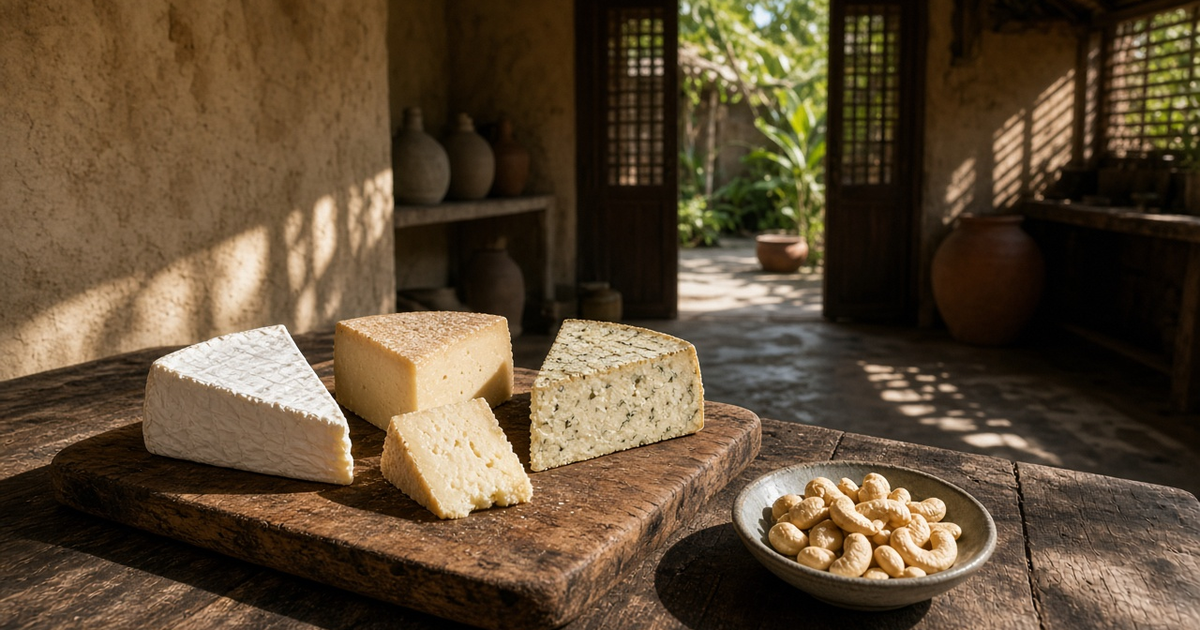
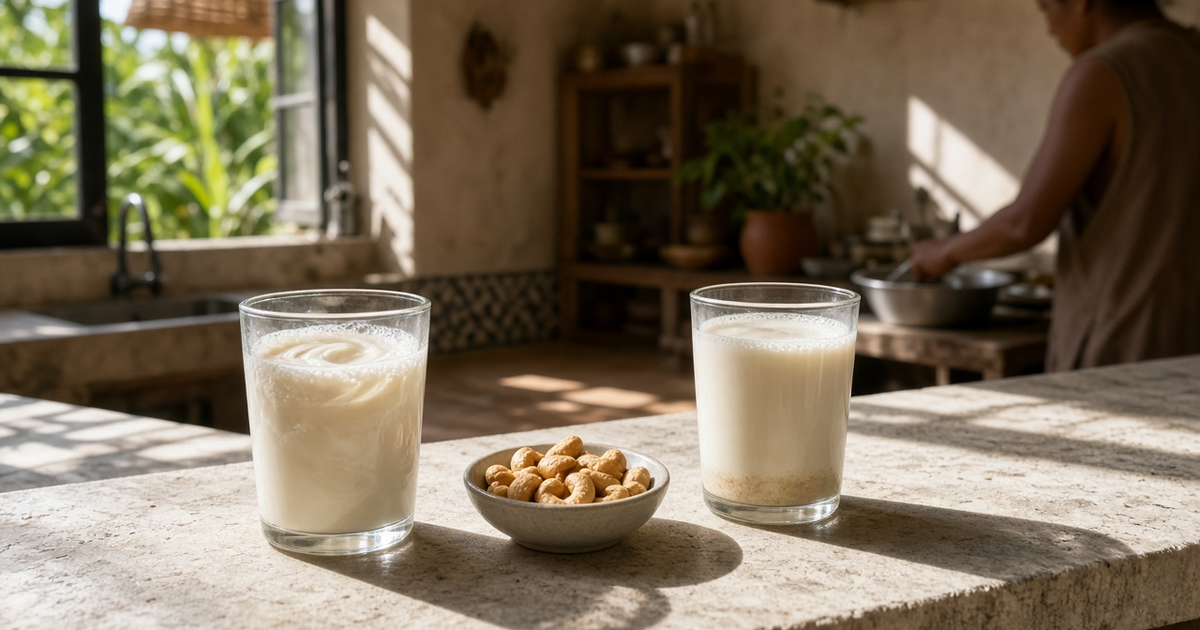
Worry Nut Fresh Cashew Mylk is made in small batches in Ubud, Bali, and it takes the emulsifier route rather than the oil route. The bottle carries six ingredients: filtered water, Indonesian cashews, Central Java coconut sugar, Kusamba sea salt, sunflower lecithin and Bali vanilla. No refined seed oils.
The lecithin keeps the cashew fat suspended so the mylk pours smooth without gums. It is a processed fraction of the sunflower seed, not the oil, and it is the honest weak point in an otherwise very short list.
The nutrition panel is lab measured by Prodia OHI, per 200 ml serving.
- Energy: 80 kcal
- Total fat: 6 g
- Sodium: 150 mg
- Carbohydrate: 5 g
- Sugar: 2 g
- Protein: 2 g
Cashew milk is not a nutritional substitute for cow’s milk. Worry Nut carries 2 g of protein per 200 ml serving against roughly 8 g in cow’s milk, and it is not fortified with calcium or vitamin D. If you are relying on milk for those nutrients, plan for them elsewhere.
Cashew is a tree nut, so this bottle is not suitable for anyone with a tree nut allergy. It is dairy free by recipe and it contains no soy, which matters if soy lecithin is the line you are avoiding.
Delivery is chilled in Bali to Canggu, Ubud and Seminyak, and to the rest of the served area on three bottles or more, with same day arrival in South Bali. Jabodetabek runs through a local stockist and is confirmed over WhatsApp. Bali orders go through the order page, where you pick a day and slot, and one litre is Rp 75.000 against a normal price of Rp 85.000.
If you are still mapping the category, start with what a clean label means and how plant milk gets classified as ultra-processed. For the other additives that show up beside oil, our ingredient explainer goes line by line.
FAQ: seed oils in plant milk
Is sunflower lecithin a seed oil? No. It is an emulsifier extracted from sunflower seeds, mostly phospholipids, and it is used at a fraction of a percent. It comes from the same seed as sunflower oil but it is not the oil.
Which plant milks in Indonesia have no added oil? The reliable test is the ingredient list, not the front of the pack. Look for a named nut or grain, water, salt and an emulsifier, and no minyak line.