What Is Cashew Milk? A Beginner's Guide
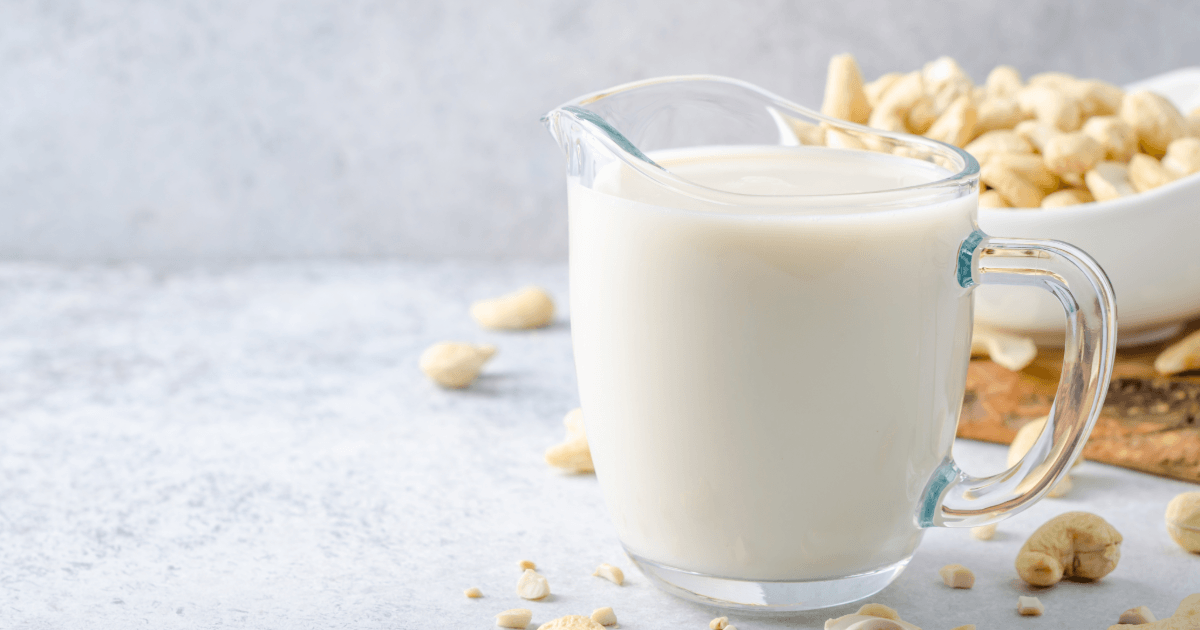
Cashew milk is a plant milk made by soaking cashews in water and blending them into a smooth, opaque drink. It is creamier than almond milk, naturally thick without added gums, and tastes mildly nutty with a soft, round finish.
What cashew milk is
Cashew milk is a liquid food made from cashews and water. The process breaks the nut into tiny particles and spreads them through water so fat and protein stay suspended. The result looks like dairy milk, pours like dairy milk, and coats a glass the same way.
Most almond milks use a small amount of nuts per liter. Gums and thickeners fill the gap the recipe leaves. Cashew milk skips that step. The nut itself carries enough fat and body to make the drink rich.
How cashew milk gets made
The steps work the same at home and in a factory. Raw cashews soak in water for a few hours until soft. A blender then breaks them into particles small enough to disappear into the liquid. The drink stays smooth as long as the particles stay small.
From there, makers choose one of two paths. Strained versions pass through a fine filter and come out lighter. Unstrained versions keep the solids in, which is where the body lives. Salt goes in to lift flavor, and many makers add a small amount of sweetener.
Packaging splits the shelf into two types.
Fresh cashew milk gets pasteurized, refrigerated, and dated within weeks. Shelf stable versions get UHT heat treatment and sit at room temperature for months. Both are safe.
Fresh tastes closer to the nut. UHT carries a cooked note from the extra heat.
You can copy the steps at home. Soak, blend, and decide on straining based on how thick you want the drink. Home batches taste fresh but settle faster than bottled ones. Shake the bottle before you pour.
How it tastes and pours
Cashew milk tastes mildly nutty and round. It is softer than almond and less starchy than oat. Unsweetened versions taste clean and slightly savory. Sweetened ones lean toward dessert without crossing the line.
The texture is the main reason people switch. Cashews are naturally creamy, so the milk needs no gums or thickeners to feel rich.
It pours heavier than almond and closer to dairy. Coffee, cereal, smoothies, and cooking all work with it. In a hot mug, the drink holds together instead of thinning out.
Labels need a quick read. Bottles range from two ingredients to long lists.
One option is six: filtered water, cashew, coconut sugar, sea salt, sunflower lecithin, vanilla. Lecithin holds fat and water in one smooth drink. Nothing in the list fakes thickness.
Sort each ingredient you see into one of two buckets: builds the drink, or patches it.
Where it works in your kitchen
Mornings are the easy use. Pour it over granola, stir it into oats, or blend it into a smoothie bowl. The body is thick enough to keep toppings floating. Protein shakes get a rounder feel than water or thin almond milk give.
Cooking leans on the same texture. Warm it with garlic and pepper and it reduces into a pasta sauce that stands in for cream.
Swirl it into soup near the end. Whisk it into curry for weight. Fold it into mashed potatoes.
One rule holds for heat: add the milk late and keep the pan off a rolling boil. Hard boiling breaks the suspension and turns the sauce grainy.
Coffee works with one note. Cashew milk holds up in a mug. It foams differently from dairy, so anyone chasing latte art should ask the barista first.
Traps new buyers run into
The first trap is the word cashew on the label. Some cashew cartons still hide gums and seed oils inside, because additives cost less than nuts. Read the panel every time, even when the bottle wears a farm photo.
The second trap is separation. Fat is lighter than water, so a resting bottle divides into layers by morning. Separation alone says nothing about safety. Judge a bottle by its date, then its smell, then its taste, in that order, after a shake.
The third trap is the short date. A refrigerated date three weeks out looks weak next to a UHT carton that promises a year. Treat the short date as a sign the maker chose a gentler process. It keeps the drink closer to its ingredients and trades shelf life for flavor.
Questions people ask
Does cashew milk taste strongly of cashews?
No, it tastes milder than you expect. Water carries most of the volume, so the nut shows up at the edges and the middle stays neutral. People who skip whole cashews often enjoy the milk.
Is cashew milk good for you?
It depends on the bottle and what you want from it.
A short-label version gives moderate calories, low sugar, and zero lactose. That last point matters to anyone who digests lactose poorly.
Treat it like any other food in a balanced diet. Anyone managing a medical condition should ask their doctor.
Can you make it at home?
Yes, the steps above work. Expect the cost to surprise you. Decent raw cashews cost more per liter than a bottled product from a serious maker. Home batches also settle faster without pro equipment.
Home wins on freshness and control. Bottled wins on consistency. Pick per occasion.
Where Worry Nut fits
Start with one bottle and three days. Pour it over breakfast on day one, blend it into something cold on day two, cook a sauce with it on day three. By the end, you will know if the texture belongs in your fridge. That test beats any review.
Indonesia grows cashews well. A small group of local makers now bottles them instead of shipping in almonds and oats. Our guide to Indonesian local plant milk maps who grows what and where the movement stands. Start there if the local thread pulls at you.
Curious how cashew stacks up against other options? Our cashew milk vs oat milk covers texture and sugar. The plant milk nutrition guide breaks down the numbers.
Our bottle is one option: six ingredients, pressed in Ubud from local cashews, pasteurized, Rp 85,000 for one liter. Order at https://worrynut.id or follow @worry.nut on Instagram.